5 Essential Ski Mountaineering Kits Every Backcountry Skier Should Carry
Introduction
If you’re heading into serious ski mountaineering terrain—steep couloirs, glaciated routes, or long alpine traverses—you already know the basics: beacon, probe, shovel, layers, and navigation. Those are assumed.
The gear that often makes the difference on big days isn’t the standard checklist—it’s the small systems that solve real problems when things go off plan.
Here are five essential kits every experienced ski mountaineer should have in their pack.
1. Sharps Kit
When the skin track ends and the snow turns firm, steep, or icy, a sharps kit earns its place. These tools turn sketchy terrain into manageable terrain and open lines that would otherwise be off-limits.
Core pieces:
Ski crampons – sized for your skis and matching your bindings
Boot crampons – pure aluminum or hybrid steel fronts
Ice axe – short (around 45 cm)
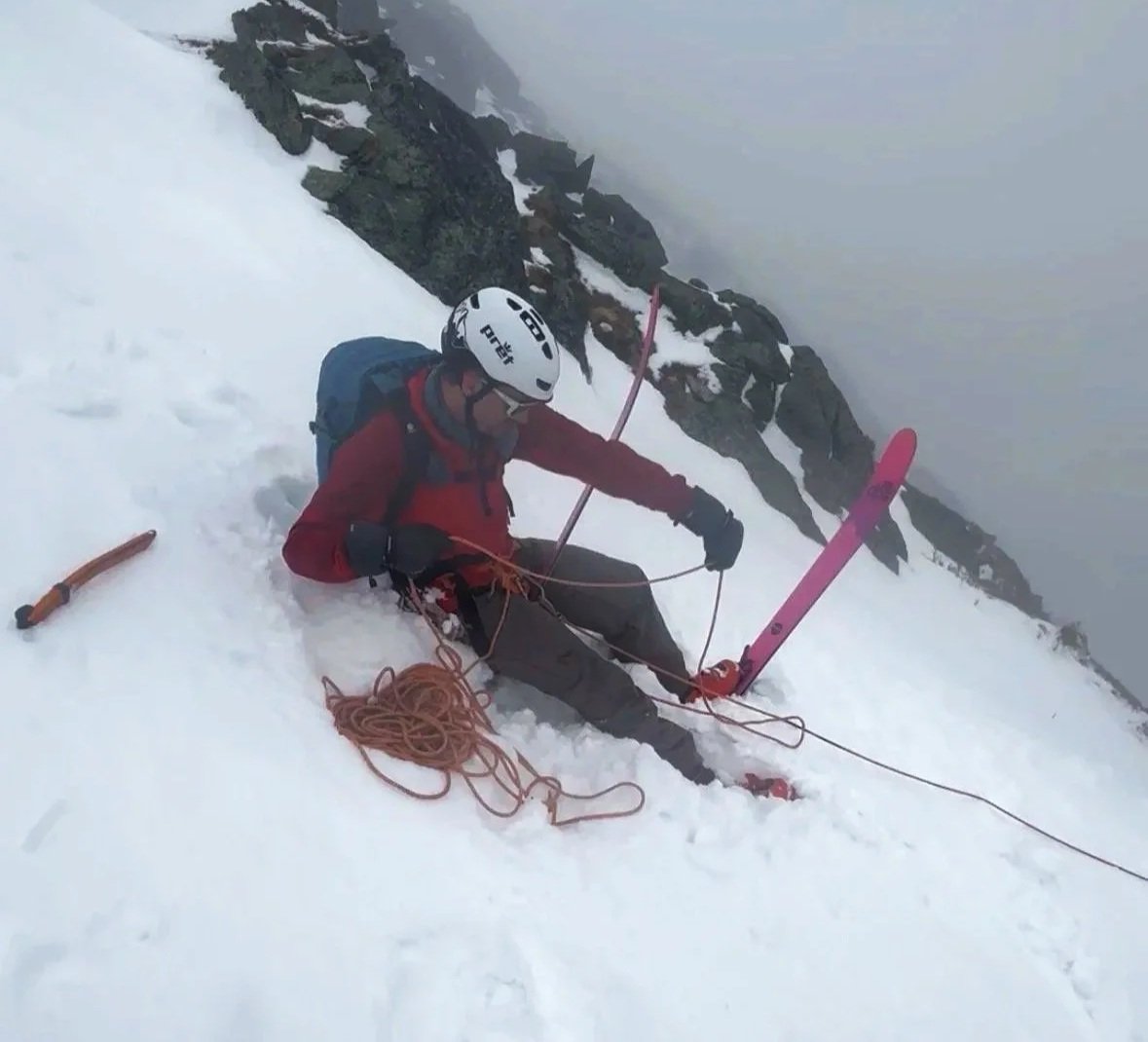
Skier using a rope to help partner
Why it matters: Even if you hope to ski the whole day, conditions change. A sharps kit gives you freedom and safety on tricky terrain.
2. Rope Kit
Not every ski mountaineering route requires a rope—but the ones that do can’t be done safely without it.
Typical rope kit:
Lightweight rope (30–40 m, e.g., Edelrid rap line)
Tip: Two ropes per team on glaciated terrain
Belay / rappel device
Carabiners and slings
Crevasse rescue gear if on glaciers
Why it matters: A rope kit allows for rappels into couloirs, glacier travel, cornice management, and safe navigation of exposed sections. Most days it stays in your pack—but when you need it, you really need it.
3. Get-Out-of-Jail Kit
(The Oh Sh#t kit)
Sometimes descents or routes don’t go as planned. Anchors are missing, snow conditions are worse than expected, or a retreat becomes necessary.
Small but powerful tools:
Piton or two
V-threader and screws
Cord or webbing
Small selection of nuts
Why it matters: This kit lets you build anchors, rappel safely, and get off the mountain even when plans fall apart.
4. Unexpected Bad Day Kit

Ski Mountaineer in their element
Even experienced teams have long days, mechanical failures, or sudden weather changes. The unexpected bad day kit combines repair and survival margin.
Items to consider:
Mini repair kit (Voilé straps, binding screws, multi-tool)
Emergency bivy or lightweight shelter
Small first aid kit (athletic tape, bandages)
Headlamp (maybe 2…)
Extra calories
Why it matters: Minimal weight, maximum safety and peace of mind. This kit can turn a potential epic into a manageable delay.
5. Efficiency Pro Kit
Big alpine days are a balancing act: climbing hard, skiing efficiently, staying warm, staying cool, and staying hydrated. The efficiency kit helps you maintain energy and comfort for sustained effort.
Suggested items:
Sun hoody as baselayer – shields from sun, regulates heat
Wind shell – protects from cold without overheating
Electrolytes – keeps energy and hydration up
Lightweight hat or buff – wind and sun protection
Sunglasses with darker lenses
Skin Wax
Why it matters: Thermoregulation and hydration let you move efficiently all day, preventing minor issues from turning into major problems.
Experience Doesn’t Eliminate Risk
Experienced ski mountaineers often move faster and carry lighter packs—but the most successful ones carry small systems that solve big problems:
Sharps kit
Rope kit
Get-out-of-jail kit
Unexpected bad day kit
Efficiency kit
Each kit adds minimal weight but maximizes options and safety when the mountains test you.