Late-season ice climbing can be some of the most fun of the year. The ice is often thicker in shaded spots, crags are less crowded, and the climbing can feel more alpine and exploratory. But as temperatures rise and snow melts, conditions change quickly. Knowing how to read ice conditions is critical for staying safe while still enjoying the season.
March sunshine!
This guide will help you understand spring ice climbing conditions, identify whether the ice is still safe to climb, and make smart decisions for late-season missions.
Understand the Seasonal Context
Spring is a transitional season for ice. Daytime temperatures rise, sun exposure increases, and the freeze-thaw cycle accelerates. Even a route that looked perfect last week may now be unsafe for climbing.
Key considerations for late-season ice climbing:
Ice thickness and structure deteriorates in warm weather, sometimes very quickly.
Know what’s underneath at all times. Ice can fail suddenly, and some structures may only be self-supported temporarily.
Rocks warm up and ice may start to sublimate (peel away) from the rock surface.
If you’re asking yourself, “Is the ice still safe to climb?” the answer requires careful observation, not guesswork.
Check the Ice, Not Just the Weather
Relying solely on forecasts is risky. Spring thaw climbing safety depends on directly assessing the ice.
Look for:
Color and consistency: Clear, blue ice is usually solid; white, snow-cone-looking ice may be weaker.
Sound: Tap the ice lightly with your tool or hammer—solid ice sounds crisp; hollow or cracked ice sounds dull.
Surface conditions: Wet or dripping ice indicates melting from above or below, reducing stability.
Temperature trends: Consecutive warm days accelerate weakening, even if the ice looks thick.
Evaluate the Entire Route
Don’t just check the section you plan to climb. Late-season risks often come from the approach, anchor points, and surrounding terrain.
Belay stations: Check for thawed ice and unstable snow.
Approach slopes: Wet snow or loose rock can trigger slides.
Adjacent terrain: Runout zones may have hidden hazards if thawing occurs.
Always ask: If the ice were to fail, would it hit me? Visibility and exit strategy are as important as ice quality itself.
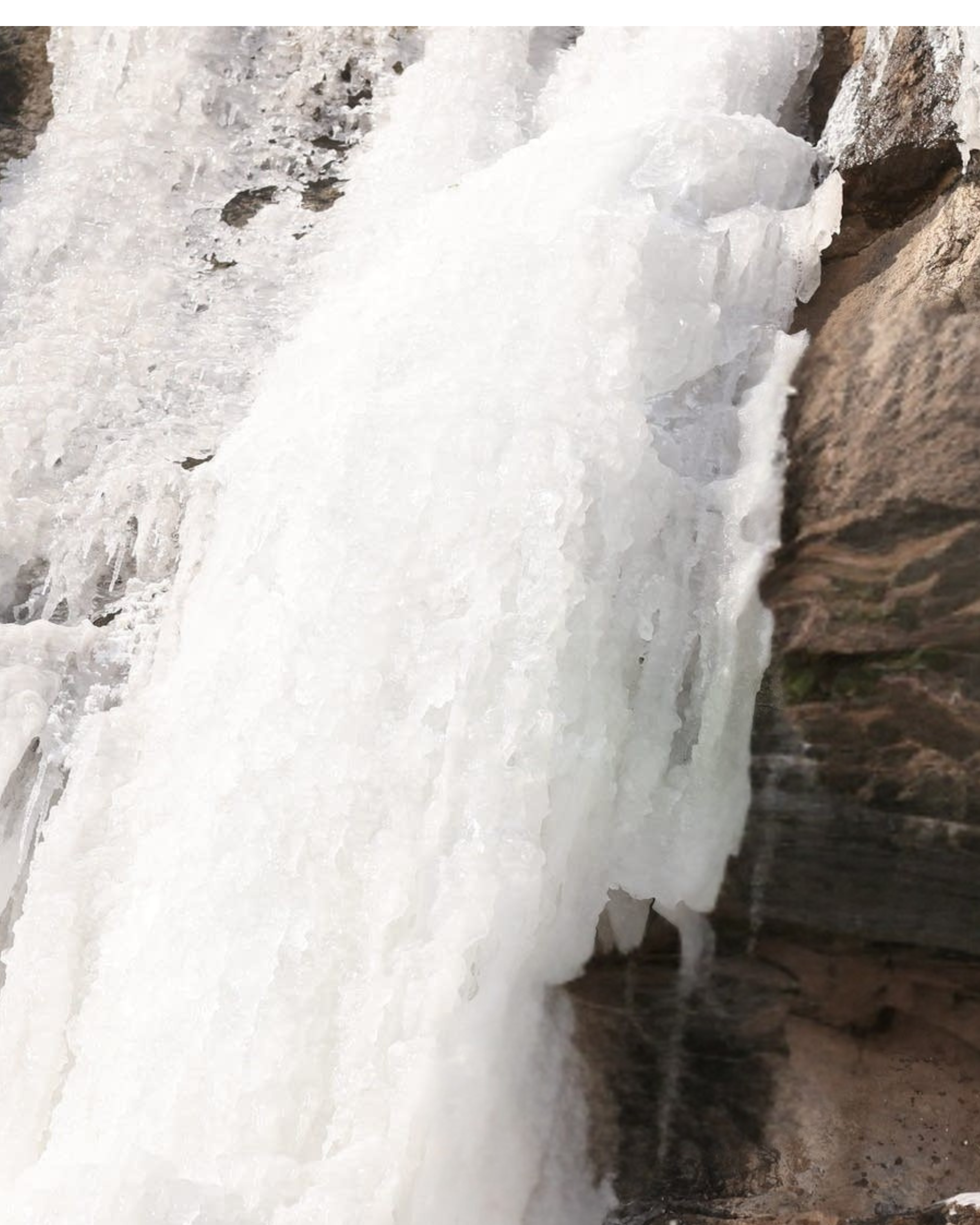
Example of ice starting to pull away from the rock.
Adjust Your Climbing Style for Warm Weather
Late-season ice requires specific adjustments:
Move quickly to reduce exposure to melting ice.
Use longer screws or multiple anchors for redundancy.
Avoid climbing under direct sun whenever possible.
Be prepared for wet conditions: waterproof layers, gloves, and boots.
This is warm weather ice climbing in its truest sense—plan for variable ice and slippery approaches.
Know When to Turn Around
One of the most important skills in late-season ice climbing is knowing when to call it a day.
Red flags include:
Ice dripping continuously or visibly sagging.
Ice screws melting out.
Rapid warming during the day.
Ice pulling away from the rock.
No summit is worth pushing into unsafe ice. Spring ice climbing conditions change fast—being conservative is the safest choice.
Final Takeaway
Late-season ice climbing can be spectacular, but it requires heightened awareness. By learning how to read ice conditions, evaluating the entire route, and adjusting your style for warm weather, you can enjoy safe, rewarding climbs while minimizing risk.
Want real time updates on conditions in New Hampshire? Follow us on Instagram