Every year I get the same email from someone in Boston or New York: “I’ve always wanted to climb Mont Blanc. Is that realistic for me?”
For a lot of people, the honest answer is yes, with the right preparation, the right timing, and the right guide. For some, it’s “not this year,” and I’d rather tell you that now than on a ridge at 4,500 meters.
I’m an IFMGA mountain guide based in New Hampshire, and I spend my summers guiding in Chamonix. This post covers who Mont Blanc is for, what the climb actually involves, what it costs (with real numbers), how to train for it from the East Coast, and why the decision has to happen months before you ever touch the mountain.
Mont Blanc at a glance
*Summit elevation— About 4,805 m (15,770 ft); it varies a few meters year to year with the summit ice cap
*Route— Chosen for each climber and the conditions. The Goûter route is the most common
*Trip length—6 days, including acclimatization
*Guide ratio—1:1, or a maximum of 1:2
*Season—June–July
*Price—From $5,150 (1:1, three tiers below)
*Deposit—20%, due before hut booking opens in December
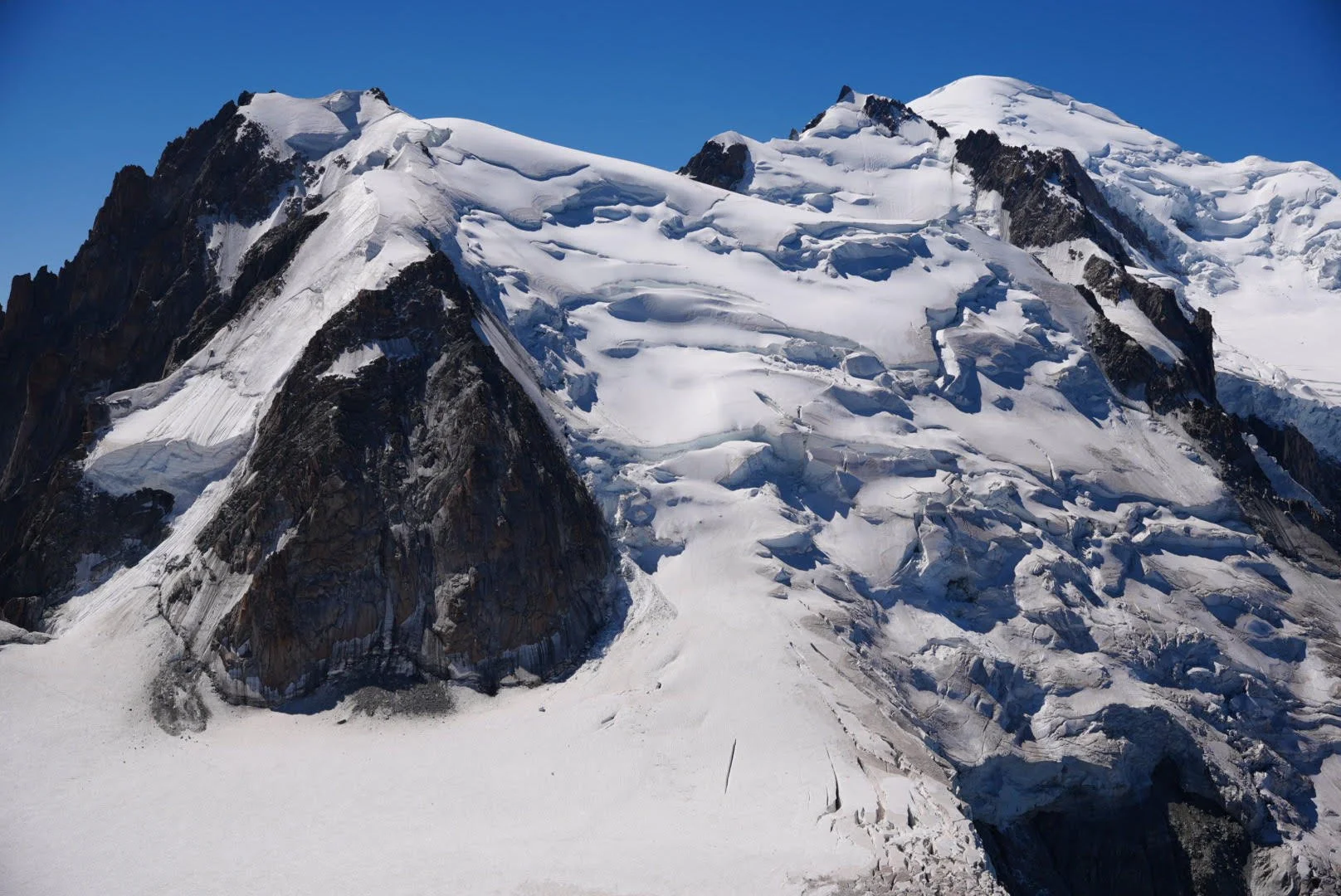
Mont Blanc from the Aiguille du Midi.
Who Mont Blanc is realistic for
Mont Blanc is not a technical climb by alpine standards. It’s a long, high, physically demanding mountain day with real objective hazard, done on very little sleep, at an altitude most people have never been to.
You’re a good candidate if:
You can hike 1,200–1,500 meters (4,000–5,000 feet) of elevation gain in a day with a pack, and do it again the next day
You’ve walked in crampons and are comfortable on steep snow, or you’re willing to learn before the trip
You’ve been above 3,500 meters before, or you’re prepared to commit to a full acclimatization plan
You can stay calm and keep moving when you’re tired, cold, and it’s 2am
You understand that the summit is never guaranteed
You should wait a season if you’ve never done any winter mountaineering, or if your fitness plan starts “sometime in the spring.” A guide can handle rope work and decision-making, but nobody can carry your fitness for you.
What the climb actually involves
There’s no cookie-cutter itinerary here. Every Vertex Mont Blanc trip is built around the climber: your experience, your fitness, and the conditions that season. That includes which route we take. Every trip follows the same structure, though.
Acclimatization first. The first part of the trip is spent going high, with climbs above Chamonix and at least one night sleeping in a high hut. Which climbs we do depends on you and the conditions. Acclimatization isn’t optional: skipping it is one of the most common reasons people fail on Mont Blanc or get sick trying.
Up to the hut. On the Goûter route, the most common way up, the climb from the Nid d’Aigle gains about 1,450 meters to the Goûter hut at 3,835 meters. It includes the crossing of the Grand Couloir, which is the most dangerous part of the route because of rockfall. Crossing it well comes down to timing, conditions, and moving efficiently, and that’s a big part of what you’re paying a guide for.
Summit day. We leave the hut in the dark and climb about 970 meters on snow and ice to the summit, via the Dôme du Goûter and the Bosses ridge. Then the work really starts: you descend all the way back down, often to the valley the same day. Most people find the descent harder than the climb.
The weather window. Mont Blanc makes its own weather. Six days gives us room to plan the summit attempt around the forecast, not the calendar.
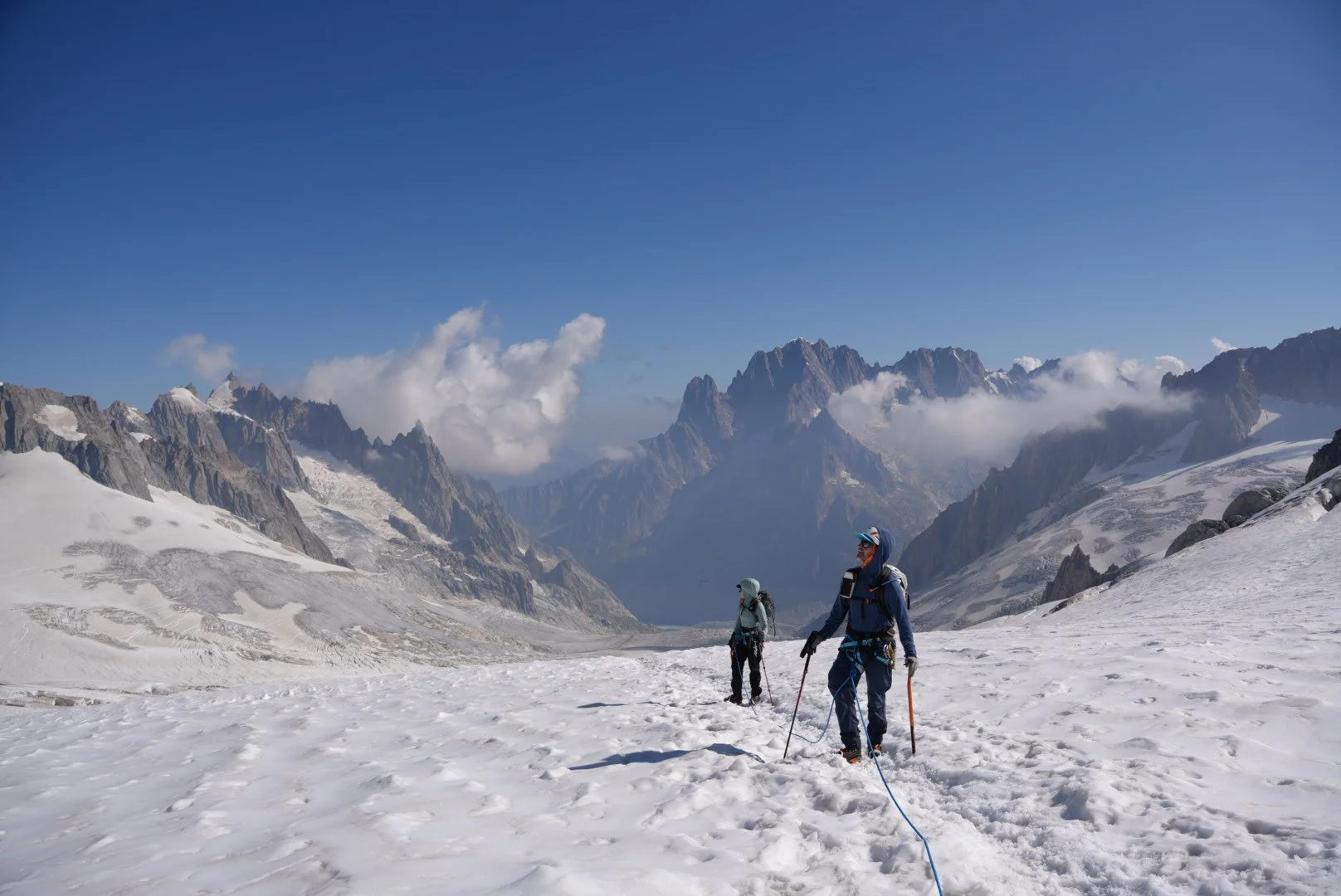
Acclimating in the Mont Blanc Massif
What it costs
Most guides don’t publish Mont Blanc pricing. I do, because you should know what you’re signing up for before we get on the phone. All prices below are for one climber with one guide (1:1).
Guide Only: $5,150
My guiding fee plus the hut deposit. You pay the remaining hut and lift costs directly, for yourself and your guide, which typically comes to $800–$1,000 total depending on your itinerary. This tier is for experienced travelers who are comfortable handling their own logistics.
Curated: $7,250
My guiding fee plus all huts and lifts for both of us, at one fixed price. I handle every booking, payment, and change, so you never deal with a hut warden or a lift ticket, and there are no surprise costs on the mountain.
Full Experience: $11,500
Everything in Curated, plus two prep days with me in New Hampshire before we go, Chamonix lodging, and airport transfers. You land, and everything is handled.
Climbing as a pair? I’ll take up to two climbers per guide. Get in touch for pair pricing.
Not included in any tier: flights, meals in town, and personal gear. Trip insurance is required and is your responsibility.
Why the price is what it is. You’re hiring an IFMGA guide, which is the highest international guiding credential. You get a maximum ratio of 1:2, a trip built around your summit odds rather than a fixed schedule, and a guide who’ll turn you around when it’s the right call, even if you paid for the summit. That last point matters more than anything else on this list.
How to train from the East Coast
You don’t need to live near big mountains to be ready for Mont Blanc. You need a plan and about six months.
Build your engine. Long uphill days with a pack are the base. Stair-climber and incline treadmill work in the week, with real hiking on weekends. Aim to build up to back-to-back days of 1,200+ meters of gain.
Get on Mount Washington in winter. It’s the best Mont Blanc training ground on the East Coast. It gives you wind, cold, crampons, ice axe use, and decision-making in weather that changes fast. A few winter days there tell both of us a lot about how ready you are.
Learn to move in crampons. Efficient footwork on steep snow and ice saves enormous energy on summit day. Most of the inefficiency I see in the Alps is footwork.
Do the Full Experience prep days, or book NH days on your own. We’ll spend them on the skills that matter for this climb: cramponing, moving roped together, and pacing. I’ll also give you an honest read on your readiness while there’s still time to adjust.
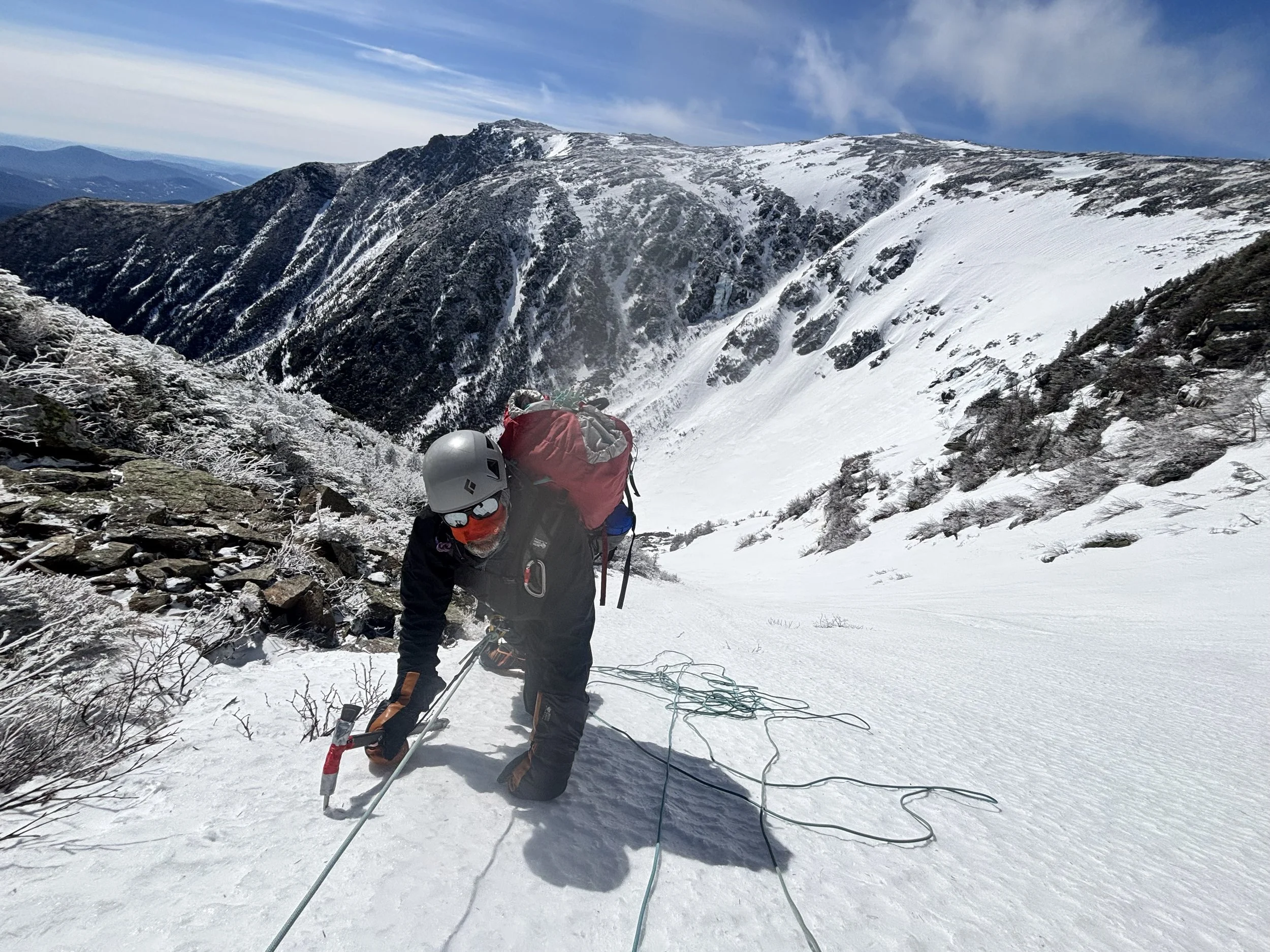
Climbing in Tuckerman Ravine on Mt Washington- preparing for big goals.
Why you have to commit by December
Hut space on Mont Blanc is limited and hard to get, and on the Goûter route a hut reservation is required to climb. Hut booking opens in December for the following summer. To give us the best chance at the dates we want, I need committed climbers before that window opens.
How booking works:
A 20% deposit holds your spot before hut booking opens in December.
Once the huts are confirmed, the balance is due within 7 days to lock in the trip.
Once you’ve paid in full, the trip is non-refundable, and I won’t cancel on you. That’s why trip insurance is required.
I reserve the right to change the objective or route for weather, conditions, or client fitness. That’s not fine print. It’s what keeps people alive on big mountains.
If we can’t get the huts we want, I’ll offer alternatives first: different dates or a different route. If none of them work for you, your deposit is refunded.
FAQ
Do I need technical climbing experience?
No technical rock or ice climbing background is required. You need fitness, comfort in crampons, and a willingness to prepare. The Full Experience prep days fill the skill gaps.
What’s the success rate?
I don’t advertise one, because it depends almost entirely on weather and how prepared you are. What I control is your preparation, the acclimatization plan, and the decisions on the mountain.
Can I go with a friend?
Yes. I’ll guide up to two climbers on one rope. Get in touch for pair pricing.
Which route do you use?
It depends on you and the conditions. The Goûter route is the most common, but I choose the route for each climber based on experience, fitness, and what the mountain is doing that season.
Why June and July?
Conditions are usually better early in the summer, with more snow cover before late-season melt opens crevasses and increases rockfall. It’s also ahead of the August heat and crowds.
Ready to start?
Mont Blanc is a big goal, and it’s very achievable if you start early and prepare properly. Every trip starts with a conversation about your experience, your fitness, and your goals, so I can tell you honestly whether this summer is the right one and which tier makes sense.
Hut booking opens in December. If you’re thinking about summer 2027, now is the time to talk.
Want to see what else I guide in the Alps? See all European Alps trips →