What an AIARE 1 Actually Teaches You (and What It Can't)
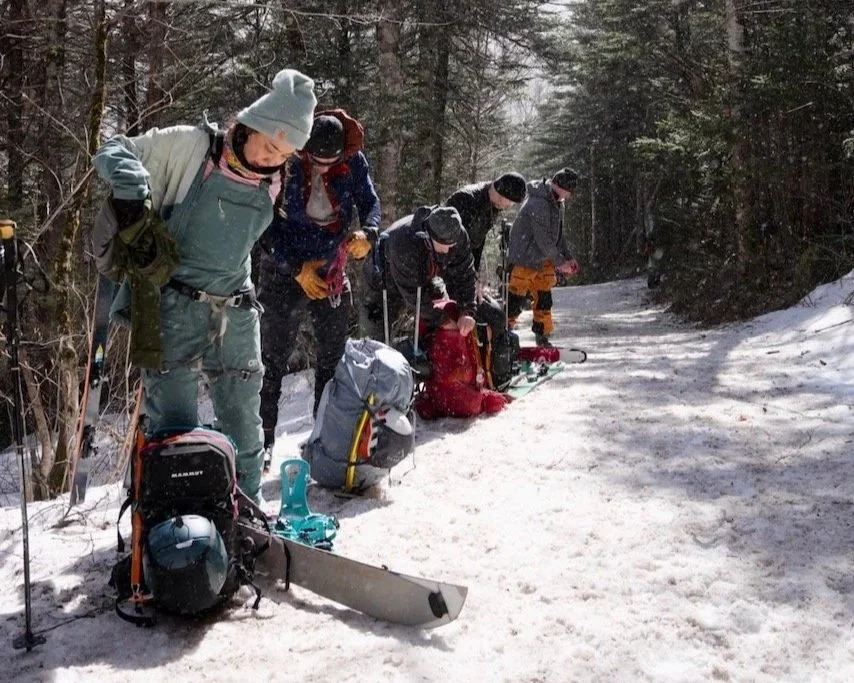
AIARE course on the way up
I see the same thing every winter. Someone finishes an AIARE 1 with a completion card and good intentions. Two weeks later they're back on the same lines, with the same partners, making the same calls they made before the course.
That doesn't mean the course failed. It means a course is a starting point, and most people treat it like a finish line.
I've spent two decades guiding in the mountains, and I'm an AIARE instructor and IFMGA guide based in the Mount Washington Valley. This post covers what an AIARE 1 really gives you, who should take one this winter, what it can't teach in two days, and how to close that gap once you're back with your own crew.
What is an AIARE 1?
AIARE 1 is the standard entry-level recreational avalanche course in the U.S., built on the curriculum from the American Institute for Avalanche Research and Education. It's designed for people who want to travel in avalanche terrain, whether that's skiing, splitboarding, or climbing, and make better decisions while they're out there.
It is not a certification. It doesn't qualify you to lead anyone. It gives you a shared framework and a vocabulary so you and your partners can plan a day, talk about hazard, and make decisions on purpose instead of by feel.
At Vertex, the course runs as an online module you complete beforehand, followed by two field days in the White Mountains-based out of Pinkham Notch with field time around Mount Washington. Groups are capped at six students, so you get real time with your instructor.
What you'll walk away with
A planning process you'll actually use. You'll learn to read an avalanche forecast, like the Mount Washington Avalanche Center's, and turn it into a plan: where you're going, what you're avoiding, and what would make you change your mind. Most accidents start at the kitchen table, not on the slope.
The ability to recognize avalanche terrain. Slope angle, aspect, terrain traps, and what's above and below you. This is the single most useful skill on the course. Once you see terrain this way, you can't go back.
An understanding of avalanche problems. Wind slab, storm slab, persistent slab, and wet avalanches behave differently, and each one calls for a different response. You'll learn how to match your terrain choices to the problem of the day.
Observations that matter. You'll learn which signs mean the snowpack is talking, like cracking, collapsing, recent avalanches, and rapid warming, and how to use them without getting lost in pit data.
A decision-making framework for groups. How to check in, communicate, and make calls as a team, so the loudest or most confident person doesn't decide for everyone by default.
Companion rescue fundamentals. Beacon search, probing, and strategic shoveling. If someone in your group is buried, the people standing next to them are the rescue.
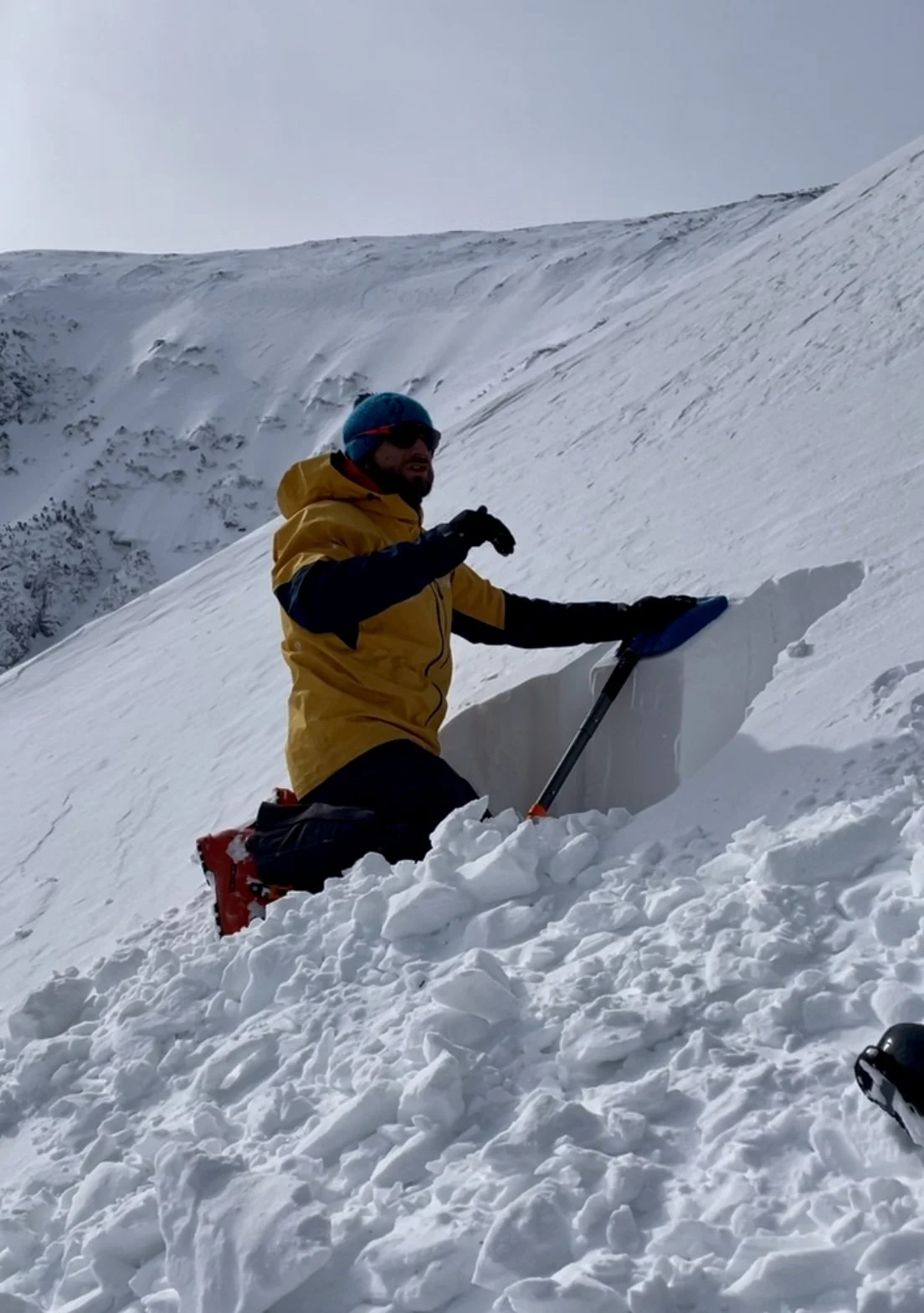
Keith Moon teaching in Tuckerman Ravine
Who should take an AIARE 1 this winter
You're ready if:
You ski or ride comfortably on groomed black runs and can handle ungroomed snow, even if it's not pretty
You've done some touring, or you're about to start, and you want to go beyond low-angle trails
You're planning to ski the Presidentials, Gulf of Slides, Tuckerman, or anywhere else that has real avalanche terrain
You've been touring for years without formal training and quietly know you've been getting lucky
You might want to wait if you've never skinned uphill at all. Get a few days of basic touring under your belt first so you can focus on the decision-making instead of your bindings. If you're new to the gear side, start with our backcountry ski gear guide.
What an AIARE 1 can't give you
This is the section most course providers skip.
It can't give you mileage. Good avalanche judgment is pattern recognition, and patterns take seasons to build. Two field days is enough to learn the framework. It is not enough to trust your gut.
It can't teach your group. On an AIARE 1, you practice decision-making with strangers. Then you go home and ski with your actual partners. Some of them took a different course, some haven't taken one at all, and all of you have habits nobody has ever questioned. Your group's communication, pace, risk tolerance, and blind spots are where most real mistakes happen, and a course can't touch any of that.
It can't fix your tactical skills. Efficient transitions, setting a good skin track, spacing on a slope, skiing one at a time into a safe spot, and getting your crew moving fast when the weather turns: these don't show up on a course syllabus, but they decide how much margin you have on a real day.
It can't tell you when you're wrong. Out on your own, a bad decision that works out feels exactly like a good one. Without someone experienced watching, you can reinforce bad habits for years.
None of this is a knock on the course. Two days is two days. The question is what you do next.
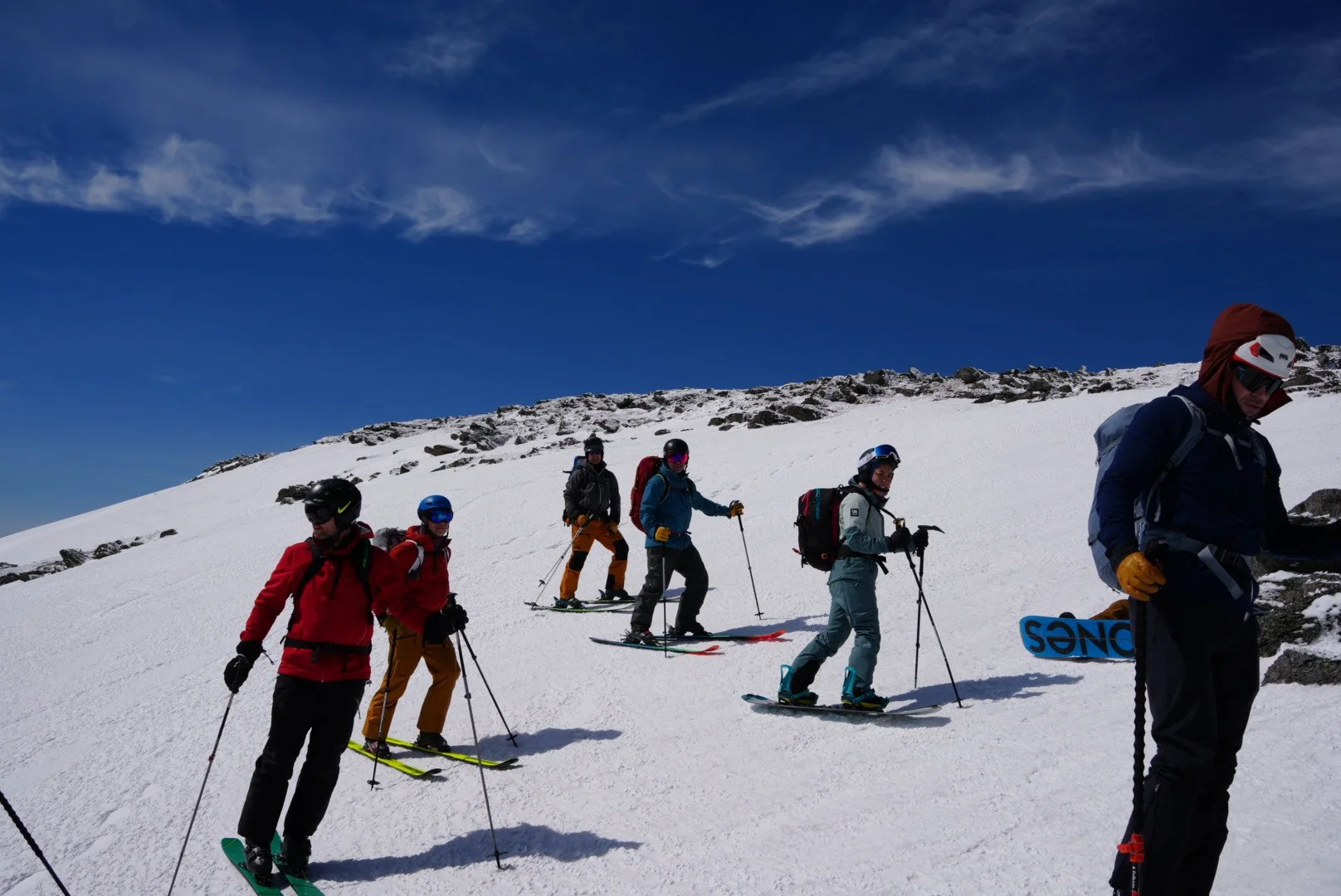
A small group dialing in their transition before the descent.
How to close the gap: a tactical day with your own group
This is where I think most people get the biggest return after an AIARE 1.
Book a private day with the people you actually ski with, and we build the day around your group's weaknesses. Before the day, I'll ask what you ski, how you plan, where you've had close calls, and what you want to get better at. Then we get tactical.
A day might include:
Planning together the night before or the morning of, using the real forecast, with you making the calls and me pressure-testing them
Skin track and route choice in actual avalanche terrain, with me explaining why I'd go here and not there
Group management: spacing, safe spots, communication, and how to make a call when not everyone agrees
Transitions and efficiency so your crew moves faster and spends less time exposed
A realistic rescue scenario under time pressure, with your group and your gear, because a beacon drill with strangers is not the same as searching for your friend
You leave having practiced the framework as a team, with the people you'll actually be making decisions with all season. For most groups, that's the difference between knowing the material and using it.
Book a private day for your group →
How to choose an AIARE 1 provider
Every AIARE 1 follows the same core curriculum, but courses are not all the same. A few things are worth asking about:
Who's teaching? Is your instructor a full-time professional guide, or someone who teaches a few weekends a year? Experience shows up in how well complex ideas get broken down, and in the stories behind the rules.
What's the ratio? Smaller groups mean more field time, more questions answered, and more individual feedback.
Where does the field time happen? You want real avalanche terrain, not just a flat spot behind the parking lot.
What happens after? A good provider can help you keep progressing, whether that's a Rescue course, guided touring days, or bigger objectives down the road.
I teach every Vertex AIARE 1 myself. I'm an AIARE instructor, an IFMGA-certified mountain guide, and an AMGA instructor, which means I also train other guides. Our groups top out at six.
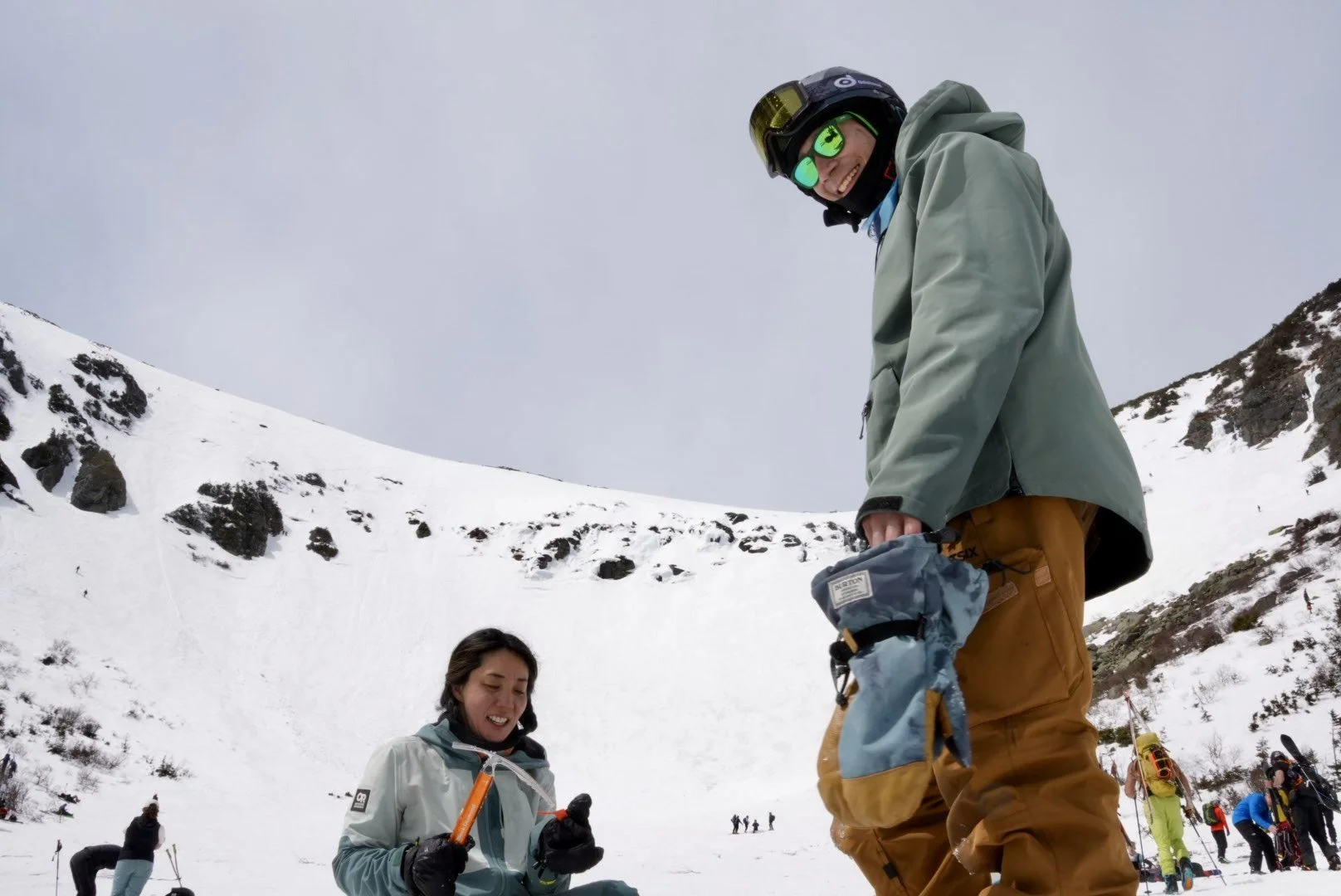
AIARE 1 group in the bowl of Tuckerman Ravine
FAQ
Do I need to be an expert skier?
No. You need to be comfortable on ungroomed snow and able to manage yourself on moderate terrain. The course is about decision-making, not ski technique.
Does it work for splitboarders?
Yes. The curriculum is the same. Just make sure you're comfortable with your transitions before the field days.
What gear do I need?
Touring setup, plus warm layers for a full day out. We can supply avalanche beacon, shovel, and probe if you don’t have it yet.
Is an AIARE 1 a certification?
No. It's a recreational course. It gives you a framework and practice, not a qualification to lead others.
When should I book?
Earlier is better. Seats are limited, groups are small, and the best field conditions come in mid-winter. See dates
Ready to start?
If you've been meaning to take an avalanche course, this is the winter to do it.
Already have your AIARE 1? Bring your crew and make it count.