Early Season Avalanche Awareness: What to Know Before the Snow Really Falls
Introduction: Why Early Season Matters
The first snow of the season is always exciting — fresh powder, crisp air, and the thrill of getting back into the mountains. But early-season conditions are tricky and unpredictable. Snowpack is shallow, weak layers are common, and the mountain hasn’t yet “settled” from autumn storms.
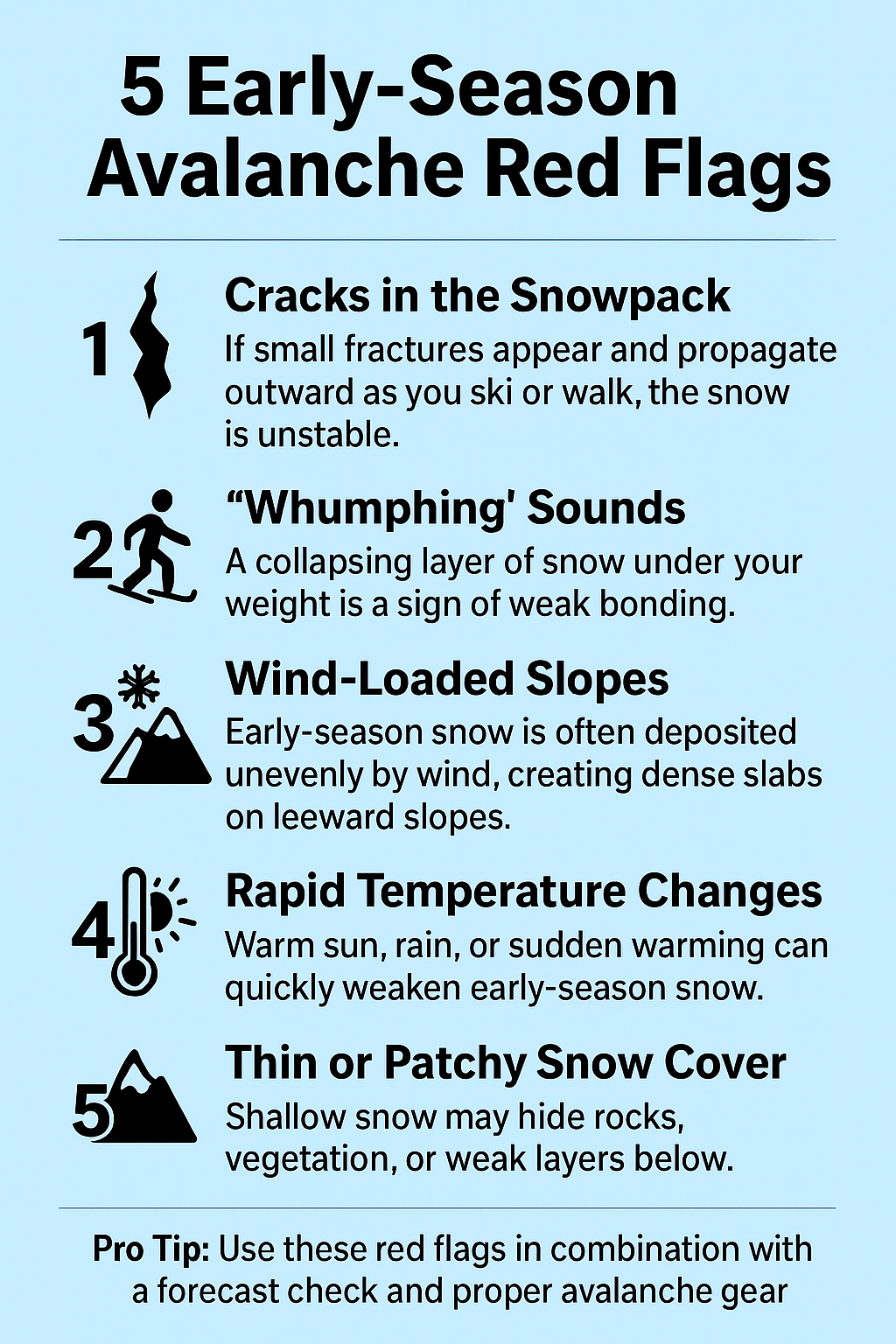
Red Flags list
What you skied last April will look and feel very different in November or December. Early snowfalls are often patchy, shallow, wind-loaded, or poorly bonded, creating hidden hazards even on slopes that appear skiable. Understanding avalanche risk in these conditions is critical for anyone heading into the backcountry.
1. Check the Avalanche Forecast
Before strapping on skis, snowboards, or climbing steep terrain, always check the local avalanche forecast.
Key things to watch for:
Early-season bulletins: Even shallow snow can trigger avalanches.
Local variations: Wind, slope aspect, and sun exposure create pockets of instability.
Recent weather: Storms, wind-loading, or temperature swings increase risk.
Understanding the forecast is the foundation of avalanche safety, especially in the early season.
2. Recognize Signs of an Unstable Snowpack
Even without digging a snow pit, you can spot warning signs:
Cracks spreading from your skis or board.
“Whumphing” sounds — sudden collapses of snow layers.
Wind slabs or dense snow over weak layers. Watch for snow being transported onto slopes.
Rapid warming or rain-on-snow events that weaken the snowpack.
Early-season snow layers are thin and newly deposited, making these signs often more pronounced. Paying attention can save you from hidden hazards.
3. Avalanche Education for Beginners
If you’re new to winter backcountry travel, take an avalanche course. Even a basic course covers:
How to read terrain and slope angles.
How to identify avalanche-prone areas.
How to carry and use essential safety gear (beacon, shovel, probe).
Early-season trips are ideal for practicing avalanche safety skills in lower-risk settings before the full winter season kicks in.
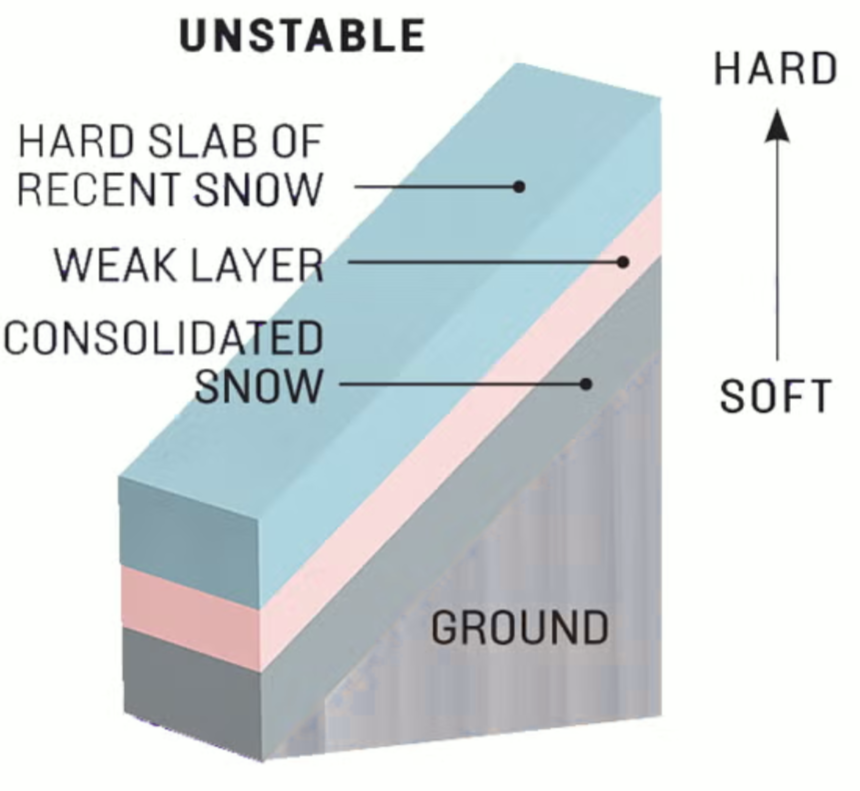
basic example of unstable snowpack
4. Travel Smart in Early Season Conditions
Stick to conservative slopes (under 30°) until snow depth and stability improve.
Travel one at a time across suspect terrain to minimize exposure.
Monitor weather and temperature, which can rapidly change snow stability.
Always travel with partners trained in avalanche rescue and carry full safety gear.
More backcountry enthusiasts are heading out earlier each year, chasing the first snow. While exciting, thin early-season snow can hide rocks, weak layers, and other obstacles.
Putting It All Together: Scale to the Mission
Early-season backcountry strategy:
Be conservative with terrain choices.
Continuously assess conditions and adjust your route.
Pack and carry all essential safety equipment.
Know when to turn around — early-season snow can be unpredictable and quickly deteriorate.
This approach applies anywhere, from the White Mountains to the Rockies: start cautiously, learn from the conditions, and scale up as the snowpack stabilizes.
Final Takeaway
Early-season snow is tempting, but it behaves differently than snow from the previous season. Staying safe comes down to:
Checking forecasts
Recognizing warning signs
Practicing avalanche education
Traveling conservatively
Respecting early-season conditions allows you to enjoy your first turns safely while building confidence for the full winter ahead.
Ready to take your skills to the next level?
Don’t wait until the snow is on the ground — join an avalanche safety course today and learn how to read terrain, recognize hazards, and travel confidently in the backcountry. Your first turns this season will be safer and more fun when you know what to look for.