Backcountry Ski Gear Guide: Everything You Need for Your First BC Tour
Heading into the backcountry for the first time is exhilarating—but it can also feel overwhelming when you start thinking about gear. From skis and skins to avalanche safety tools, your backcountry ski setup is more than just a way to get up the mountain—it’s your toolkit for safety, comfort, and performance.
In this guide, we’ll break down the essential backcountry ski gear for beginners and provide a complete ski touring gear checklist so you can hit the snow confidently.
1. Skis, Boots, and Bindings: Your Backcountry Ski Setup
Your skis are the backbone of any BC adventure. Unlike resort skis, backcountry skis need to balance weight, stability, and float in deep snow. There are many options on the market, so consider this a high-level overview:
Skis: Aim for around 95mm underfoot for versatile performance. Lighter skis climb easier but may feel less stable on descents.
Bindings: Alpine touring (AT) bindings let your heel lift for the climb and lock down for skiing downhill.
Boots: Comfort on the uphill is just as important as downhill performance. Look for boots with a walk mode and solid flex for skiing.
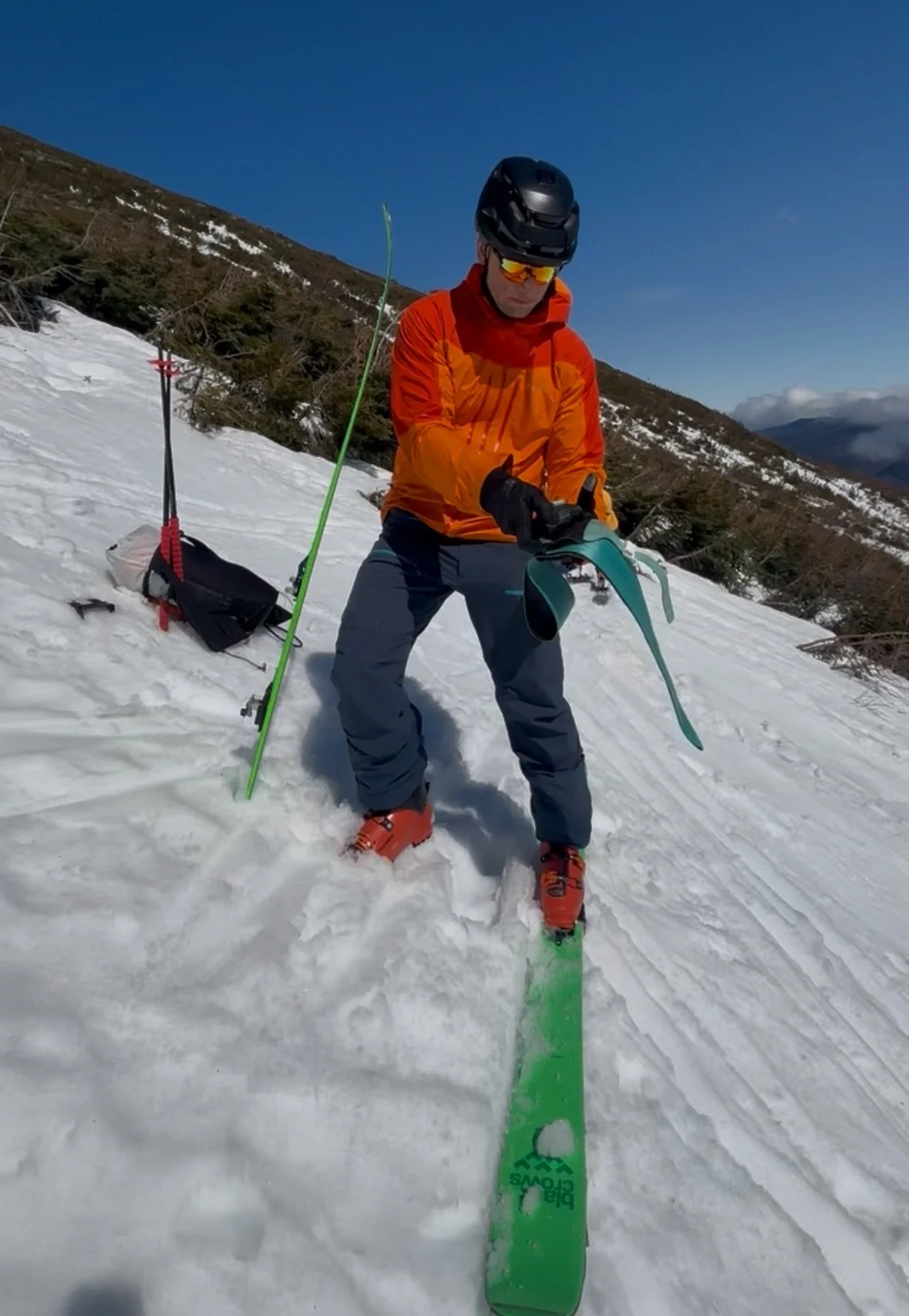
Pulling skins off- ready to ski
Pro tip: Test your setup in a controlled environment—like a backyard slope or ski area—before hitting the backcountry. Comfort and confidence are key.
2. Skins: Your Uphill Companion
No backcountry ski tour is complete without skins. They attach to the base of your skis to grip the snow on the ascent.
Material: Mohair skins glide well but wear faster; synthetic skins last longer but require more effort.
Sizing: Trim to match your ski base for maximum efficiency.
Maintenance: Dry thoroughly after use and store glue-to-glue to preserve adhesion.
Pro tip: Practice putting skins on and off before your first tour—it’ll save time and frustration in the field.
3. Avalanche Safety Gear: Non-Negotiable Essentials
If you’re heading into avalanche terrain, safety gear is non-negotiable. Your beginner ski touring kit isn’t complete without:
Beacon: Lightweight, easy-to-use devices that should be practiced regularly.
Probe: Collapsible, at least 240cm long to reach deeper burials.
Shovel: Durable and lightweight; bonus points if it includes a “hoe mode” for faster snow removal.
Pro tip: Never enter avalanche terrain without knowing how to use your gear. Avalanche training is as important as the gear itself.
4. Clothing and Layering for Backcountry Skiing
Weather in the backcountry changes fast. A proper layering system keeps you warm, dry, and comfortable:
Base Layer: Moisture-wicking and breathable.
Mid Layer: Insulation like fleece or lightweight synthetic.
Shell: Waterproof, breathable protection from wind and snow.
Accessories: Gloves, goggles, helmet, and a hat.
Pro tip: Layering isn’t just about warmth—it allows you to regulate temperature efficiently on climbs and descents.

BC skiing= access to wild places
5. Packs and Accessories
A good backcountry ski pack carries essentials without slowing you down. Look for features like:
Dedicated avalanche compartment
Helmet holder
Multiple ski attachment options
Key items to pack:
Hydration system
Extra layers and snacks
First aid kit
Multi-tool or repair kit
Map, compass, or GPS
Optional but recommended: Avalanche airbag packs for extra protection in high-risk terrain.
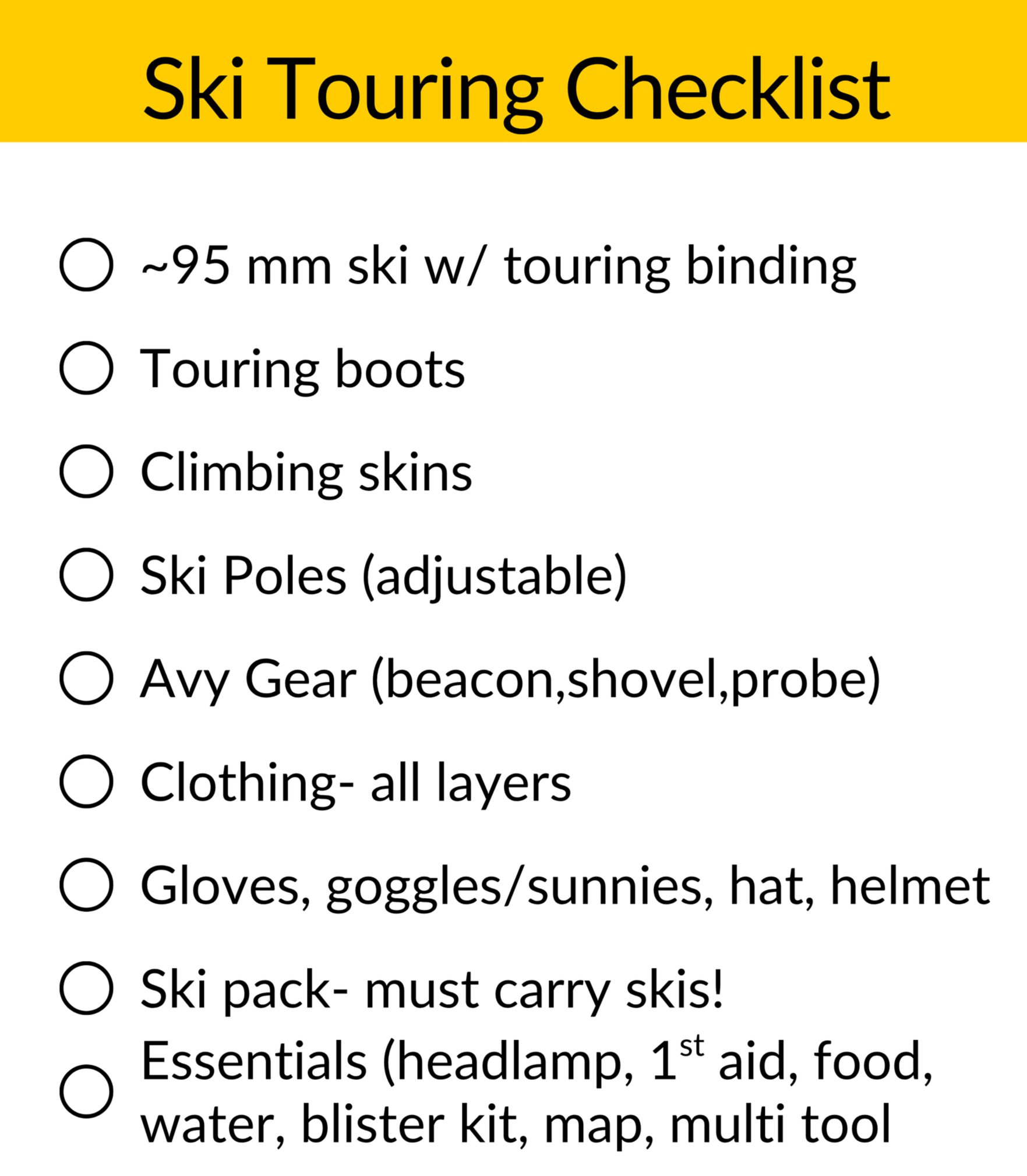
6. Beginner Ski Touring Kit Checklist
7. Final Thoughts
Your first backcountry ski tour is about more than ticking gear boxes—it’s about preparation, confidence, and safety. With the right backcountry ski gear, you’ll spend less time worrying about what you forgot and more time enjoying the mountains.
Whether you’re building your beginner ski touring kit or upgrading your setup, focusing on quality, safety, and usability sets you up for countless successful tours in the backcountry.